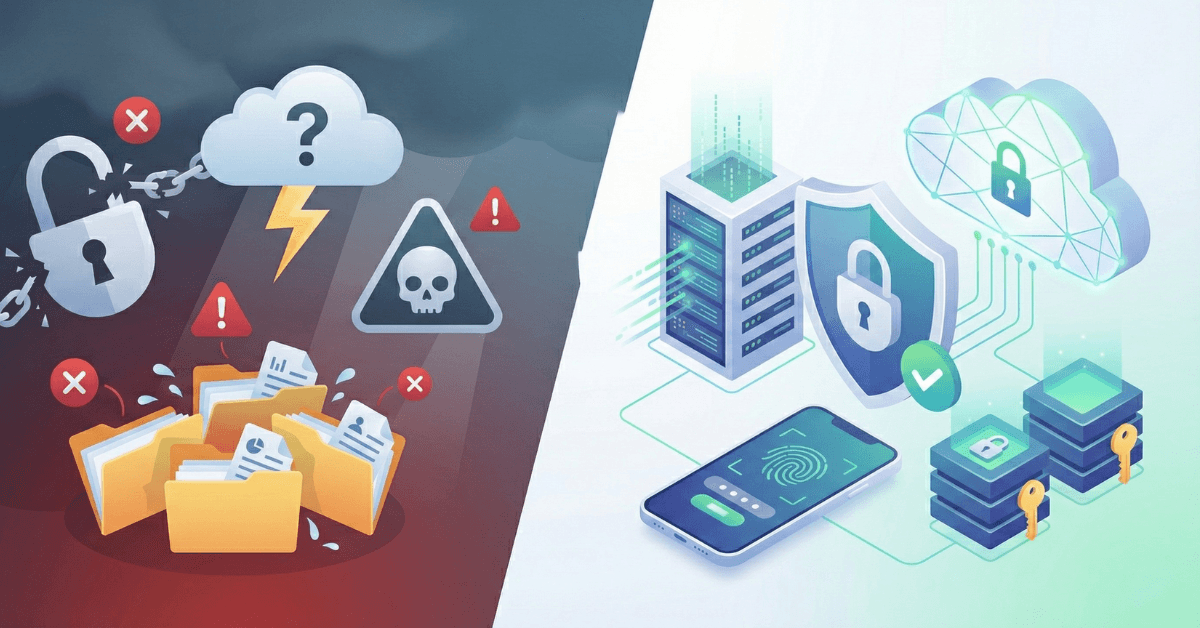


Cloud accounting has revolutionized how Indian businesses manage their finances. Yet despite its widespread adoption, security concerns continue to hold many businesses back from making the switch. Research shows that 94% of businesses actually saw improved security after moving to the cloud—but myths persist.
Let's separate fact from fiction and understand why cloud accounting might be more secure than you think.
Myth 1: "Cloud Storage Is Less Secure Than Local Servers"
The Reality: Cloud providers invest far more in security than most businesses can afford.
Many business owners believe that keeping financial data on their office computers or local servers is safer than "storing it somewhere on the internet." This misconception costs businesses both security and efficiency.
Why Cloud Is Actually More Secure:
Bank-Level Encryption: Leading cloud accounting platforms use 256-bit AES encryption—the same standard banks use to protect financial transactions
24/7 Security Monitoring: Cloud providers employ dedicated security teams that monitor systems around the clock for threats
Multiple Security Layers: Internal firewalls, intrusion detection systems, DDoS protection, and regular penetration testing
Automatic Updates: Security patches are applied immediately, unlike on-premise systems where updates may be delayed or skipped
The On-Premise Reality: Your office server might have basic antivirus software, but it likely lacks advanced threat detection, has infrequent security updates, and may be vulnerable to physical threats like fire, theft, or flooding.
Research indicates that 85% of cyberattacks target on-premise infrastructure, while businesses using cloud solutions report significantly fewer security incidents.
Myth 2: "I'll Lose Control Over My Financial Data"
The Reality: You maintain full ownership and control, with better access management tools than on-premise systems.
The fear of losing control is one of the biggest barriers to cloud adoption. Business owners worry that once data moves to the cloud, they won't be able to manage who accesses it or how it's used.
How Cloud Actually Enhances Control:
Role-Based Access: Define exactly what each team member can view, edit, or approve
Audit Trails: See who accessed what data, when, and what changes they made
IP Restrictions: Limit access to specific locations or devices
Two-Factor Authentication: Add an extra security layer beyond just passwords
Instant Access Revocation: Immediately disable access when an employee leaves
With on-premise software, if someone's laptop is stolen or an employee is terminated after hours, your data remains vulnerable until you can physically access the server.
Myth 3: "Cloud Services Can Access My Financial Information"
The Reality: Reputable providers have strict data confidentiality policies and limited data access.
Many business owners fear that cloud service providers can freely browse their financial records. This misconception often stems from not understanding how cloud security works.
The Truth About Data Access:
Encrypted Data: Your data is encrypted both in transit and at rest. Even if someone intercepts it, they see only meaningless characters
Zero-Knowledge Architecture: Many providers cannot decrypt your data without your credentials
Strict Privacy Policies: Reputable providers are legally bound to confidentiality agreements
Compliance Certifications: SOC 2, ISO 27001, and other certifications verify that providers follow strict data handling protocols
hisabkitab, for instance, ensures that your financial data remains private and encrypted, accessible only through your secure login credentials.
Myth 4: "What If the Cloud Provider Goes Down?"
The Reality: Cloud infrastructure offers better uptime and disaster recovery than on-premise solutions.
The concern about service availability is valid—but on-premise systems face even greater risks.
Cloud Reliability Facts:
99.9%+ Uptime: Leading cloud providers guarantee availability with redundant systems
Multiple Data Centers: Your data is automatically backed up across different geographic locations
Instant Disaster Recovery: If one data center fails, another takes over seamlessly
No Hardware Failures: You're not vulnerable to your server crashing or hard drives failing
On-Premise Risks: Power outages, hardware failures, natural disasters, theft, and fire can all cause complete data loss. How many businesses regularly back up their local servers? And when they do, are those backups stored safely offsite?
Cloud accounting platforms like hisabkitab perform automatic daily backups at multiple secure locations, ensuring your data survives any disaster.
Myth 5: "Cloud Accounting Is Too Expensive for Security Benefits"
The Reality: Cloud solutions often cost less than maintaining secure on-premise systems.
When calculating the true cost of on-premise security, businesses often overlook hidden expenses.
Hidden Costs of On-Premise Security:
Server hardware purchase and maintenance (₹50,000 - ₹5,00,000+)
IT staff for system management and security
Regular software license renewals
Security software subscriptions
Power and cooling costs
Physical security measures
Downtime costs when systems fail
Cloud Accounting True Cost:
hisabkitab's plans start at just ₹2,999 per year and include enterprise-grade security, automatic backups, 24/7 monitoring, regular security updates, disaster recovery, and compliance support—all without additional IT infrastructure.
Research shows that 91% of businesses find cloud solutions make it easier to meet compliance requirements at lower costs.
Myth 6: "GST and Indian Compliance Data Isn't Safe in the Cloud"
The Reality: Cloud platforms are specifically designed to meet Indian regulatory requirements.
Indian business owners worry about storing GST invoices, TDS records, and other compliance documents in the cloud. These concerns are understandable but misplaced.
How Cloud Ensures Compliance:
Data Residency: Many providers store Indian business data within India, meeting RBI and IT Act requirements
Audit-Ready Records: Maintain complete, tamper-proof records required for GST audits
Secure GST Portal Integration: Direct, encrypted connections to government portals
Automatic Compliance Updates: Software updates automatically to reflect new GST rules and rates
hisabkitab is built specifically for Indian businesses by Chartered Accountants who understand compliance requirements. The platform ensures your GST invoices, e-way bills, and financial records meet all regulatory standards while remaining completely secure.
Myth 7: "I Can't Access My Data If Internet Goes Down"
The Reality: Most businesses already depend on internet connectivity for operations.
While it's true that cloud accounting requires internet access, this "disadvantage" is largely theoretical in today's business environment.
The Internet Dependency Reality:
Already Connected: Your business likely already depends on internet for email, payments, banking, e-commerce, and communication
Mobile Hotspots: If office internet fails, access your accounts via mobile hotspot
Multiple Locations: Work from home, client offices, or while traveling
Offline Capability: Many cloud apps offer limited offline functionality
With on-premise software, you're still stuck. You can't access data from home when needed urgently, can't share information with your CA remotely, and can't work if your office is inaccessible.
Myth 8: "Migration Will Expose My Data to Risks"
The Reality: Professional migration services ensure secure data transfer with zero exposure.
The fear of data compromise during migration prevents many businesses from upgrading to better systems.
How Secure Migration Works:
Encrypted Transfer: All data moves through secure, encrypted channels
Validation Checks: Verify that all data transferred correctly before going live
Parallel Running: Test the new system while keeping the old one active
Complete Audit Trail: Track every piece of data throughout the migration
hisabkitab offers one-click migration from Tally, Busy, and Excel with full data validation. Your historical records, customer data, and transaction history transfer securely without manual handling or exposure risks.
The Real Security Risks You Should Worry About
While myths about cloud security persist, the actual threats to your financial data are quite different:
Weak Passwords: Using simple passwords like "123456" or "password123" compromises any system, cloud or on-premise. Use strong, unique passwords and two-factor authentication.
Phishing Attacks: Employees clicking malicious links or sharing credentials is a top security threat. Regular training helps, but cloud platforms also offer advanced phishing protection.
No Backups: On-premise systems without regular backups risk complete data loss. Cloud platforms backup automatically, but verify that your current system does too.
Delayed Security Updates: Postponing software updates leaves security vulnerabilities open. Cloud platforms update automatically without disruption.
Former Employee Access: Not immediately revoking access when employees leave creates security risks. Cloud systems allow instant access revocation from anywhere.
What to Look for in Secure Cloud Accounting Software
Not all cloud accounting platforms are equal. When evaluating options, verify these security features:
Essential Security Features:
256-bit AES encryption for data at rest and in transit
Two-factor authentication (2FA) for all user logins
Role-based access control with granular permissions
Automatic daily backups stored in multiple locations
Audit logs tracking all user activities
SOC 2 or ISO 27001 certification proving security standards
Regular security audits by independent third parties
Compliance with Indian data regulations
Bonus Features:
IP whitelisting to restrict access locations
Session timeouts for inactive users
Automatic logout on suspicious activity
Real-time security alerts
Data export capabilities for your records
hisabkitab incorporates all these security features while remaining affordable and easy to use for Indian businesses.
Making the Switch: Security-First Migration
If you're ready to move to cloud accounting, follow these steps for a secure transition:
Choose a Reputable Provider: Research security certifications, read reviews from similar businesses, and verify Indian compliance support
Plan Your Migration: Identify what data needs to transfer, clean up old records before migration, and schedule migration during low-activity periods
Set Up Security Properly: Enable two-factor authentication, create role-based access for all users, set strong password requirements, and configure IP restrictions if needed
Train Your Team: Explain new security features, practice secure login procedures, review access permissions, and establish security best practices
Verify Everything: Confirm all data transferred correctly, test access from different devices, review audit logs, and back up your data independently
Monitor Ongoing: Regularly review access logs, update passwords periodically, audit user permissions, and stay informed about security updates
The Bottom Line on Cloud Security
The perception that cloud accounting is less secure than on-premise solutions is outdated and dangerous. The reality is that cloud platforms offer superior security through enterprise-grade encryption, 24/7 professional monitoring, automatic backups and disaster recovery, regular security updates, and compliance certifications.
For Indian businesses managing GST compliance, inventory, invoicing, and financial reporting, cloud accounting software like hisabkitab provides not just better functionality but better security than traditional systems.
The question isn't whether cloud accounting is secure enough—it's whether your current system is secure enough compared to what's available.
Experience Secure Cloud Accounting with hisabkitab
Why hisabkitab Is Built Security-First:
✓ Created by Chartered Accountants who understand Indian compliance and security needs
✓ Bank-level encryption protecting all financial data
✓ Automatic daily backups at multiple secure locations
✓ GST compliance with secure portal integration
✓ Role-based access control for complete team management
✓ Audit trails tracking every transaction and change
✓ Indian data residency meeting all local regulations
✓ 24/7 platform monitoring for immediate threat response
Get Started Securely Today:
Free Trial: Test security features with full invoicing capabilities at no cost
Seamless Migration: One-click secure transfer from Tally, Busy, or Excel
Expert Support: CAs guide you through secure setup and best practices
Affordable Plans: Starting at ₹2,999/year with all security features included
Visit hisabkitab.co to experience cloud accounting that's not just powerful and compliant—but truly secure.
Continue Reading