

Why Bookkeeping Matters for Indian SMEs
For small and medium businesses in India, bookkeeping is more than just recording numbers it’s the foundation of financial stability. Every business, whether a startup or an established SME, needs clear visibility on expenses, revenue, cash flow, and tax obligations.
Yet many SMEs still rely on manual records or spreadsheets. This often leads to errors, missed GST entries, delayed reporting, and difficulty in tracking profitability. As businesses grow, manual bookkeeping becomes time-consuming and unreliable.
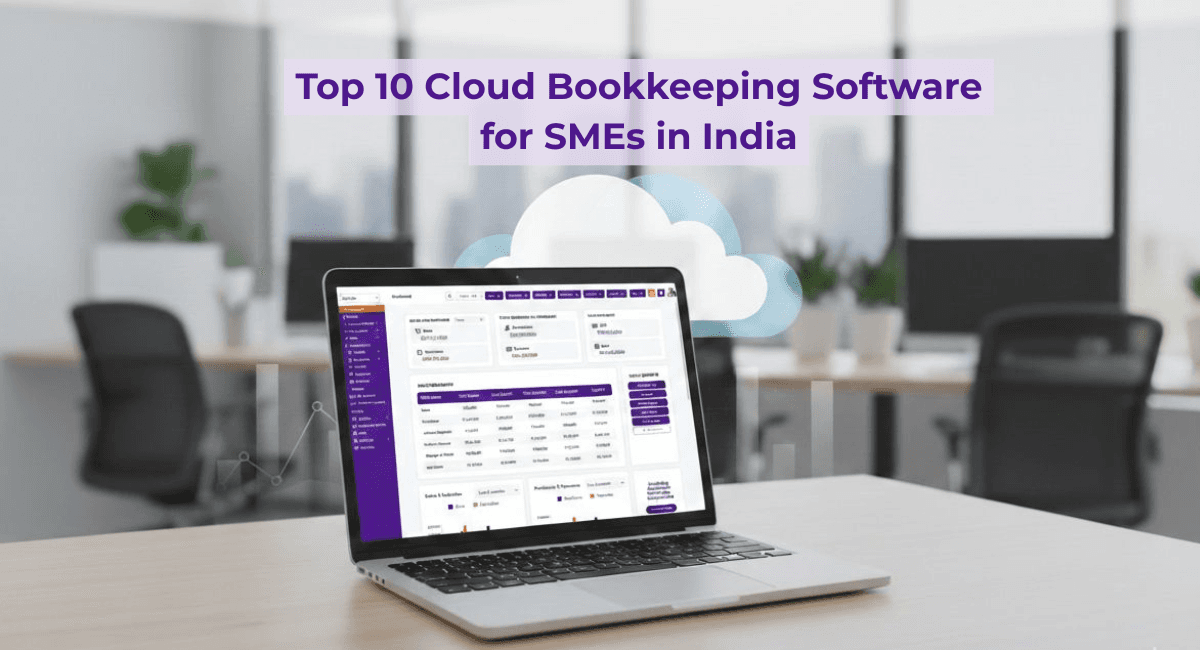
Cloud bookkeeping software helps solve these challenges by automating financial records, reducing manual data entry, and giving business owners real-time access to their financial data. With the right system, SMEs can stay compliant, organised, and financially aware.
What to Look for in Bookkeeping Software
Before choosing bookkeeping software, SMEs should focus on practical features that make daily financial management easier:
GST-ready compliance
The software should generate GST-ready invoices and reports for smooth filing and reconciliation.
Real-time financial reports
Profit & loss, expense tracking, and cashflow visibility help in better decision-making.
Automation features
Automatic entry from invoices, bank statements, and expenses reduces manual work.
Ease of use
A simple interface ensures business owners and teams can use it without accounting complexity.
Cloud access
Being able to access financial data from anywhere is now essential for modern businesses.
Outstanding & expense tracking
Tracking receivables, payables, and expenses ensures better cashflow management.
Top 10 Cloud Bookkeeping Software for SMEs in India
There are several bookkeeping solutions available for Indian SMEs today. Each has its own strengths depending on business size, workflow, and accounting complexity.
1. hisabkitab
hisabkitab is a modern cloud bookkeeping and accounting platform designed for small and medium businesses that want a simpler and more automated approach to financial management.
It focuses on reducing manual work and providing real-time visibility into business finances. With features like automated data capture, GST-ready records, expense tracking, and financial dashboards, it helps businesses maintain organised books without heavy accounting effort.
It also integrates with existing systems like Tally, allowing businesses to move towards automation gradually without disrupting current workflows.
Best suited for: SMEs looking for a simple, cloud-based bookkeeping system with automation and real-time reporting.
2. Zoho Books
Zoho Books is a widely used cloud bookkeeping and accounting solution offering automation and integrations.
Highlights:
GST-ready invoicing
Expense tracking
Client and vendor portals
Integration with Zoho apps
Best suited for: Businesses already using Zoho ecosystem tools.
3. QuickBooks Online
QuickBooks Online provides cloud bookkeeping with strong reporting and automation features.
Highlights:
Automated bank reconciliation
Custom financial reports
Multi-user access
Expense and income tracking
Best suited for: Growing SMEs with structured finance processes.
4. TallyPrime (with Cloud Setup)
TallyPrime remains one of the most commonly used accounting and bookkeeping tools in India.
Highlights:
Strong ledger control
GST compliance
Inventory tracking
Cloud access via add-ons
Best suited for: Businesses comfortable with traditional accounting systems.
5. Busy Accounting Software
Busy combines bookkeeping with inventory and billing features.
Highlights:
GST-ready billing
Inventory management
Purchase and expense tracking
Detailed reporting
Best suited for: Trading and distribution businesses.
6. Xero
Xero is a global cloud bookkeeping platform known for collaboration and real-time reporting.
Highlights:
Multi-user access
Bank reconciliation
Financial dashboards
Integration with business tools
Best suited for: SMEs working with remote accountants or international operations.
7. Vyapar
Vyapar offers simple bookkeeping and billing features for small businesses.
Highlights:
GST billing
Expense tracking
Offline functionality
Customer outstanding tracking
Best suited for: Small traders and retail businesses.
8. Marg ERP
Marg ERP is widely used in retail and distribution sectors.
Highlights:
Inventory and billing
GST reports
Supplier management
Multi-store support
Best suited for: Inventory-heavy businesses.
9. myBillBook
myBillBook focuses on quick invoicing and basic bookkeeping.
Highlights:
Simple invoice creation
Expense tracking
Mobile-based use
Customer outstanding tracking
Best suited for: Micro and small businesses.
10. Sage Business Cloud
Sage offers cloud-based bookkeeping with simple financial reporting tools.
Highlights:
Automated invoicing
Expense tracking
Financial reports
Cloud access
Best suited for: Small businesses looking for basic cloud bookkeeping.
How to Choose the Right Bookkeeping Software
Selecting bookkeeping software depends on your business needs. Consider:
Level of automation required
GST compliance features
Ease of use for your team
Real-time reporting capabilities
Integration with existing tools
Budget and scalability
The right software should reduce manual effort while giving better financial clarity.
Conclusion
Cloud bookkeeping software has become essential for SMEs aiming to maintain accurate records, stay compliant, and make informed financial decisions. With several reliable tools available, businesses can choose solutions that match their workflow and growth plans.
Adopting modern bookkeeping software not only improves efficiency but also gives business owners better control over their finances helping them focus more on growth and less on manual accounting work.
If your business is planning to move from manual bookkeeping to a more organised and automated system, exploring modern cloud bookkeeping platforms can be a good starting point.
The right tool can save time, improve accuracy, and provide complete financial visibility for smarter business decisions.
Continue Reading