



Top 10 Ways to Reduce Manufacturing Costs Without Compromising Product Quality

Manufacturers face a constant challenge: reducing production costs while maintaining product quality. Rising raw material prices, production wastage, inefficient inventory management, and hidden manufacturing expenses can quickly reduce profit margins.
However, reducing costs does not mean purchasing cheaper materials or cutting corners. Sustainable cost reduction comes from identifying inefficiencies, improving resource utilization, and understanding the actual cost of every finished product.
With the right processes and manufacturing cost management tools, businesses can control expenses without compromising quality.
In this guide, we explore 10 practical ways to reduce manufacturing costs, analyze common production problems, and explain how hisabkitab can help manufacturers improve cost visibility and control.
Quick Overview: Manufacturing Cost Problems and Solutions
Common problem | Recommended solution |
|---|---|
Excessive raw material consumption | Set standards and compare actual usage |
Unclear product costs | Calculate total manufacturing costs |
High production wastage | Track and analyze wastage |
Inventory mismatches | Record material consumption and finished goods |
Uncontrolled production expenses | Track additional manufacturing costs |
Inaccurate production records | Maintain production-wise documentation |
Unnoticed production inefficiencies | Review manufacturing reports |
1. Optimize Raw Material Usage with a Bill of Material (BOM)
Problem:
Manufacturers often consume more raw materials than required because production teams lack clear material specifications.
Problem analysis:
When material requirements are calculated manually for every production batch, errors and inconsistencies can occur. These may lead to overconsumption, unnecessary purchases, and production delays.
Business impact:
Excess material consumption increases unit costs and ties up working capital in inventory.
Solution:
Create a Bill of Material (BOM) for each product. Define the standard quantities of raw materials needed to manufacture a finished product, and use these standards to plan production and measure consumption.
How hisabkitab helps:
hisabkitab allows manufacturers to create BOMs and define raw material requirements for finished products. This reduces repeated manual entry and provides a standard against which actual material consumption can be compared.

2. Calculate the Actual Cost of Every Finished Product
Problem:
Manufacturers may know their raw material expenses but still underestimate the total cost of production.
Problem analysis:
Labour, packaging, and other production-related expenses can be overlooked when calculating product costs. As a result, the estimated cost may differ significantly from the actual cost.
Business impact:
Inaccurate costing can lead to poor pricing decisions, lower margins, and an incorrect understanding of product profitability.
Solution:
Calculate the complete manufacturing cost by including raw materials, labour, packaging, and other applicable production expenses. Review the cost per unit before making pricing or production decisions.
How hisabkitab helps:
hisabkitab supports finished-product costing using raw materials and additional manufacturing costs. This helps businesses develop a more complete picture of production expenses.
3. Identify and Reduce Production Wastage
Problem:
Excessive scrap, rejected materials, and avoidable losses increase manufacturing costs.
Problem analysis:
Wastage can result from inaccurate measurements, inconsistent processes, damaged materials, or inefficient production methods. Without records, manufacturers may struggle to determine where the losses occur.
Business impact:
Higher wastage increases material costs and can reduce production efficiency without increasing the quantity of saleable goods.
Solution:
Record production wastage, calculate wastage as a percentage of material consumed, and investigate recurring or unusually high losses. Improve processes based on the findings rather than cutting materials indiscriminately.
How hisabkitab helps:
hisabkitab helps track manufacturing wastage and analyze consumption patterns. These records can help businesses identify where further investigation or process improvement may be needed.
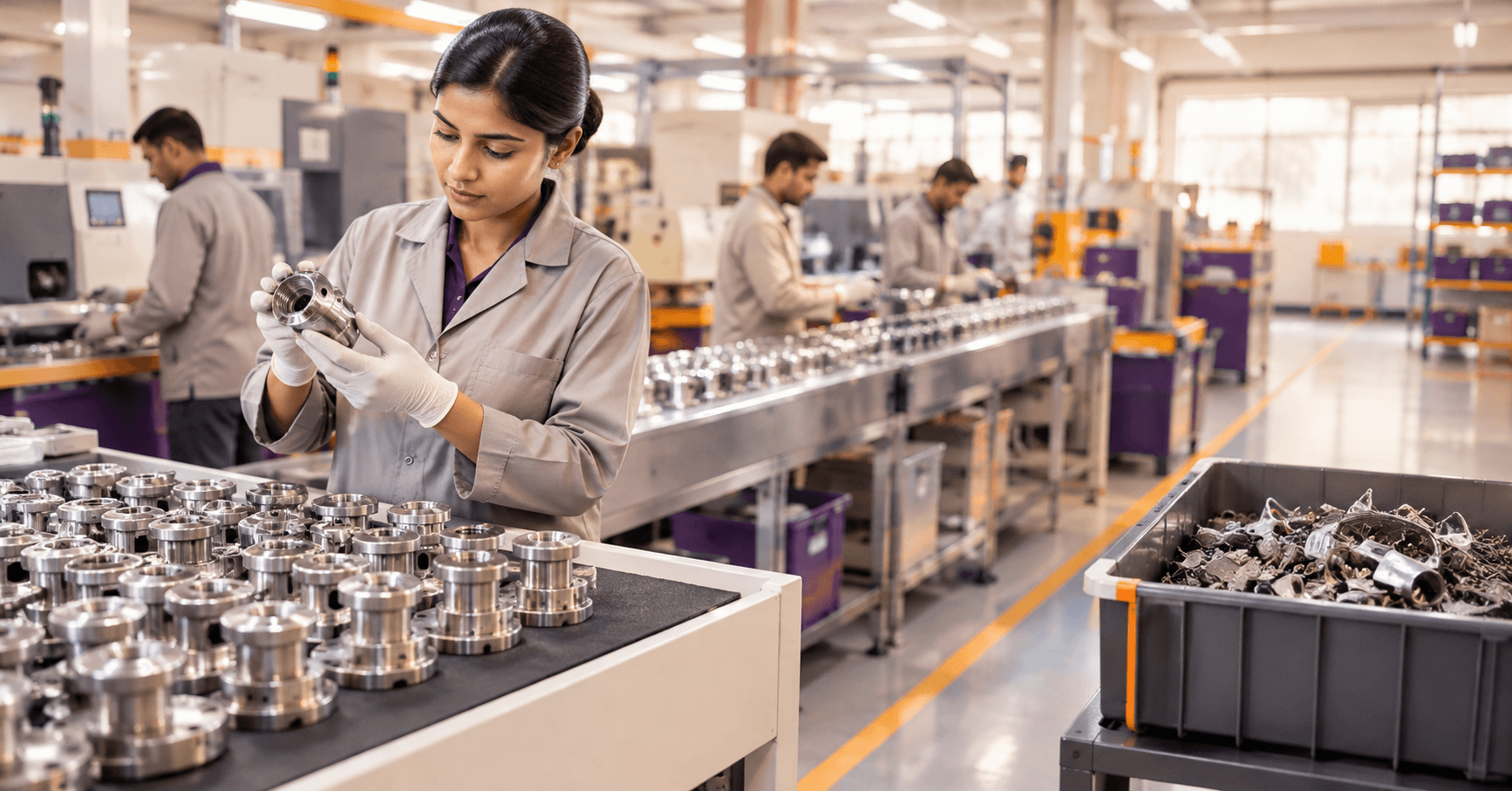
4. Improve Raw Material and Finished Goods Tracking
Problem:
Inventory records do not always match the actual quantities available in the factory or warehouse.
Problem analysis:
When raw materials issued to production and finished goods generated are not recorded consistently, businesses can lose visibility into stock movements. This makes it harder to plan purchases and production schedules.
Business impact:
Poor tracking can contribute to excess stock, unexpected shortages, delayed orders, and avoidable inventory costs.
Solution:
Record raw materials consumed during production and finished goods produced. Reconcile recorded quantities with physical stock regularly, and maintain clear records of inventory movements.
How hisabkitab helps:
hisabkitab supports tracking of raw materials consumed and finished goods generated through manufacturing records, helping businesses maintain better visibility into production-related stock movements.
5. Record Every Manufacturing Activity Accurately
Problem:
Production decisions are made using incomplete or delayed records.
Problem analysis:
If production quantities and material consumption are recorded only after a batch is completed or not recorded consistently businesses may struggle to explain cost variations and inventory differences.
Business impact:
Incomplete records make it difficult to investigate production losses, verify costs, and understand the performance of individual batches.
Solution:
Record each production transaction with the relevant materials consumed, finished products produced, date, and supporting voucher details. Establish a consistent process for entering and reviewing manufacturing activity.
How hisabkitab helps:
hisabkitab supports manufacturing journals to record actual production, raw material consumption, and finished product output, creating a structured record of manufacturing transactions.
6. Track Additional Manufacturing Costs Separately
Problem:
Indirect production expenses are overlooked or not allocated appropriately.
Problem analysis:
Labour, packaging, and other production-related costs can be recorded separately from raw materials. If they are excluded from product costing, the resulting figure may not represent the full manufacturing cost.
Business impact:
Underestimated production costs can distort pricing, profitability analysis, and decisions about which products to manufacture.
Solution:
Identify relevant additional manufacturing expenses and record them consistently. Include applicable expenses in the total production cost using an allocation method suitable for the business.
How hisabkitab helps:
hisabkitab enables manufacturers to record additional manufacturing costs separately and include them in total manufacturing cost calculations, improving cost visibility.
7. Compare Standard and Actual Material Consumption
Problem:
Manufacturers cannot easily explain why a production batch used more or less material than expected.
Problem analysis:
A BOM provides a standard quantity, but actual consumption may vary due to process inefficiencies, measurement errors, or changes in production conditions. Recording only the final output hides these differences.
Business impact:
Unexplained variations can lead to recurring waste, inaccurate estimates, and missed opportunities to improve production efficiency.
Solution:
Compare standard material requirements with actual consumption for each production run. Investigate significant differences, identify their causes, and update production practices when justified.
How hisabkitab helps:
hisabkitab supports actual-versus-standard consumption tracking, allowing manufacturers to examine variations between BOM quantities and the materials actually used.
8. Record Finished Products, By-Products, and Scrap
Problem:
Production records account for the main finished product but overlook secondary outputs and scrap.
Problem analysis:
Some manufacturing processes generate multiple outputs from the same batch. If by-products and scrap are not recorded, inventory and production-cost records may be incomplete.
Business impact:
Incomplete output records can create stock discrepancies and make it harder to understand material utilization and production losses.
Solution:
Document all relevant outputs from a production run, including finished goods, by-products, and scrap. Use consistent recording practices and review the quantities against material consumption.
How hisabkitab helps:
hisabkitab supports recording multiple production outputs, including finished products, by-products, and scrap, giving businesses a more complete record of manufacturing activity.
9. Maintain Production-Wise Records
Problem:
Manufacturers struggle to trace the costs and materials associated with a particular production run.
Problem analysis:
When records are scattered across spreadsheets, paper documents, and separate systems, identifying the details of a specific batch can take time. It also becomes harder to compare production runs consistently.
Business impact:
Poor traceability delays investigations, weakens cost analysis, and makes it difficult to identify recurring operational problems.
Solution:
Maintain structured production-wise records with dates, voucher numbers, locations, materials consumed, and products produced. Use consistent documentation so that individual transactions can be reviewed when required.
How hisabkitab helps:
hisabkitab supports structured manufacturing transaction records, helping businesses organize production details and review manufacturing activity more systematically.
10. Use Manufacturing Reports to Identify Cost-Saving Opportunities
Problem:
Businesses collect production data but do not consistently use it to improve performance.
Problem analysis:
Without reviewing material consumption, production costs, output, and wastage together, manufacturers may miss recurring inefficiencies or fail to notice whether corrective actions are working.
Business impact:
Cost-control efforts become reactive, and the same production issues may continue to affect margins.
Solution:
Review manufacturing reports regularly. Compare production runs, monitor material usage and wastage, investigate unexpected cost changes, and assign follow-up actions to the relevant team.
How hisabkitab helps:
hisabkitab provides manufacturing reports that help businesses analyze production, consumption, costs, and wastage, supporting more informed cost-control decisions.

How to Build an Effective Manufacturing Cost-Control Process
Implementing individual improvements is useful, but a consistent process helps make cost control sustainable.
Establish standards: Define BOM quantities and expected production costs for each product.
Record actual activity: Document materials consumed, output produced, wastage, and additional expenses.
Compare results: Identify differences between standard and actual consumption or cost.
Investigate the causes: Determine whether variations are related to materials, production methods, equipment, or recording errors.
Take corrective action: Improve processes, train staff, or adjust purchasing and production plans as needed.
Review performance: Use manufacturing records and reports to assess whether the changes are producing the intended results.
Key Metrics to Monitor for Manufacturing Cost Reduction
Metric | What it tells you |
|---|---|
Material consumption variance | Difference between standard and actual material usage |
Wastage percentage | Proportion of consumed material recorded as waste |
Manufacturing cost per unit | Total applicable production cost divided by units produced |
Production output | Quantity of finished products generated |
Inventory variance | Difference between recorded and physical stock |
Additional cost per unit | Additional manufacturing expenses per finished unit |
Review these metrics together rather than in isolation. For example, reducing material usage is not an improvement if it also increases defects or lowers product quality.
Common Mistakes to Avoid
Using cheaper materials without testing: Material changes can affect durability, performance, and customer satisfaction.
Reducing quality checks: Fewer inspections may allow defects to reach customers and increase rework or returns.
Ignoring indirect expenses: Raw materials alone do not represent the full manufacturing cost.
Failing to investigate variations: Recording wastage is useful, but understanding its cause is what enables improvement.
Making decisions from outdated records: Incomplete or delayed production data can lead to inaccurate conclusions.
Final Thoughts
Reducing manufacturing costs without compromising quality requires better control over materials, production processes, inventory, and expenses. The most effective approach is not simply to spend less, but to identify where resources are being used inefficiently and take targeted action.
By establishing BOM standards, calculating complete product costs, tracking wastage, recording manufacturing activity, and reviewing actual-versus-standard consumption, manufacturers can make more informed decisions about production efficiency and cost control.
hisabkitab manufacturing features help bring these records and cost calculations together, giving businesses better visibility into material consumption, finished goods, production expenses, and wastage.
Looking to improve manufacturing cost visibility? Explore how hisabkitab can help your business organize manufacturing records and make more informed production decisions.
book your free demo today
Continue Reading