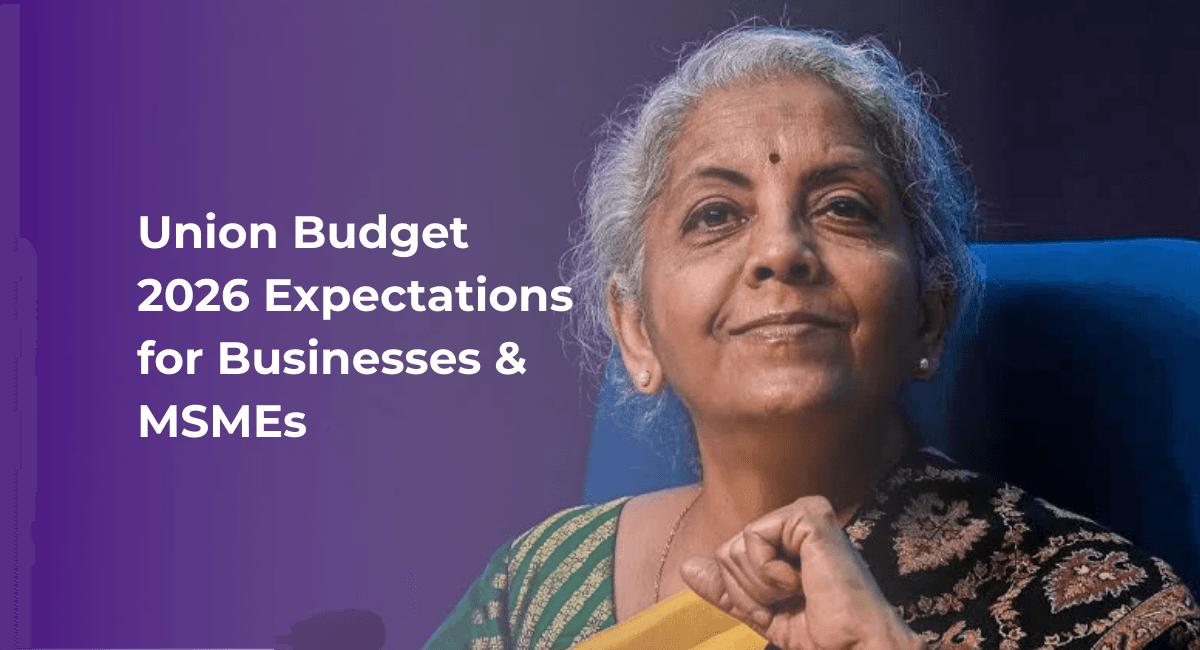


Union Budget 2026 Expectations: What Businesses, MSMEs & Taxpayers Want
Every year, the Union Budget sets the direction for how businesses operate, pay taxes, and plan their finances. For small businesses, MSMEs, startups, and professionals, the budget is not just about numbers it directly impacts tax outgo, compliance workload, cash flow, and growth decisions.
As we look ahead to the Union Budget 2026, businesses across India are hoping for reforms that make taxation simpler, compliance easier, and growth more sustainable. This blog outlines the key expectations from Union Budget 2026 and what different stakeholders are looking for.
Why the Union Budget Matters for Businesses & Taxpayers
The Union Budget affects businesses in multiple ways:
Changes in income tax and corporate tax
GST rules and compliance requirements
Cash flow due to advance tax, refunds, and credits
Cost of doing business through regulatory changes
Incentives for growth, technology, and employment
For MSMEs and startups especially, even small policy changes can have a big impact on day-to-day operations.
Income Tax Relief Expectations for Individuals
Individual taxpayers continue to expect relief that increases disposable income and reduces tax complexity.
Key expectations include:
Higher basic exemption limits
Simplified tax slabs
Reduced surcharge and cess burden
Better clarity between old and new tax regimes
Faster processing of refunds
Higher take-home income not only benefits individuals but also boosts spending, which directly supports small businesses.
Tax Simplification for Small Businesses & MSMEs
MSMEs form the backbone of the Indian economy, yet they face one of the heaviest compliance loads.
Businesses are expecting:
Simplified tax structures
Clearer rules for presumptive taxation
Reduced documentation requirements
Easier advance tax calculations
Less frequent rule changes
Simplification helps MSMEs focus more on operations and less on paperwork.
GST Reforms and Compliance Ease
While GST has unified taxation, compliance remains a challenge especially for small businesses.
Common expectations from Union Budget 2026 include:
Fewer GST return filings
Simplified reconciliation processes
Easier handling of mismatches
Faster GST refunds
More clarity on GST rates and classifications
Businesses want GST to be predictable, not stressful.
Support for Startups, Tech & Service-Based Businesses
Startups and service-based businesses operate in fast-changing environments and need policy support that matches their pace.
Key expectations include:
Tax incentives for early-stage startups
Relief on ESOP taxation
Simplified compliance for service exports
Support for digital and tech-driven businesses
Encouragement for innovation-led growth
Such measures help startups scale without being weighed down by compliance pressure.
Digitalisation, AI & Automation in Taxation
Technology is transforming how businesses manage finance and compliance. Many are expecting the budget to further push digital adoption.
Expected focus areas:
Increased use of automation in tax systems
Better integration between government portals
Reduced manual data entry
Encouragement of AI-based compliance tools
Faster and more transparent filings
Automation reduces errors, saves time, and improves accuracy across the ecosystem.
Ease of Doing Business & Reduced Compliance Burden
One of the strongest expectations from Union Budget 2026 is less compliance, not more.
Businesses are hoping for:
Fewer overlapping filings
Unified reporting where possible
Less frequent changes in rules
Practical timelines for implementation
Reduced penalties for minor errors
Ease of doing business is not just about new registrations it’s about smooth day-to-day operations.
What CAs & Accountants Expect from Union Budget 2026
Chartered Accountants and accounting professionals play a critical role in compliance and advisory.
Their expectations include:
Simplified return structures
Fewer reconciliations between portals
Better data consistency across systems
Stable laws with fewer last-minute changes
Stronger technology integration with accounting software
When accountants work efficiently, businesses benefit automatically.
How Technology & AI Accounting Help After Budget Changes
Budget changes often mean new rules, updated rates, and revised compliance requirements. Businesses that rely on manual accounting struggle to adapt quickly.
AI-powered accounting software like hisabkitab helps businesses:
Adjust faster to tax and compliance changes
Maintain accurate books in real time
Track compliance deadlines automatically
Reduce manual errors during transitions
Get real-time visibility into cash flow and taxes
Technology acts as a buffer between policy changes and daily business operations.
Conclusion
Union Budget 2026 is expected to focus on simplification, digitalisation, and growth support. Businesses, MSMEs, startups, and professionals are not just looking for tax relief they want clarity, stability, and ease.
As compliance systems evolve, businesses that adopt smarter accounting and compliance tools will be better positioned to adapt quickly and stay stress-free.
Stay Budget-Ready with hisabkitab
Budget changes don’t have to mean confusion and last-minute panic.
Use hisabkitab for stress-free accounting, automated compliance tracking, and real-time financial visibility so your business stays prepared before and after every budget update.
Book a demo today and experience accounting that works with you, not against you.
Continue Reading