

Accounting has always been a critical part of running a business, but it has also been one of the most time-consuming and error-prone tasks. Traditionally, businesses relied on manual data entry, spreadsheets, or basic accounting software that required constant human input.
Today, this is changing rapidly. With the rise of AI accounting software, businesses can automate large parts of their accounting work, reduce errors, and gain real-time financial visibility. But what exactly is AI accounting software, and how does it work in practice?
This guide explains the concept in simple terms.
What Is AI Accounting Software?
AI accounting software is an accounting system that uses artificial intelligence and automation to perform tasks that were traditionally done manually.
Instead of relying entirely on users to enter data, AI accounting software can:
Read invoices and bills
Extract key details automatically
Categorise transactions intelligently
Update ledgers in real time
Reduce repetitive accounting work
The goal of AI accounting is not to replace accountants, but to remove manual effort, improve accuracy, and keep financial records continuously updated.
How AI Accounting Is Different from Traditional Accounting Software
Traditional accounting software depends heavily on manual inputs. Someone has to type sales entries, purchase bills, expenses, and journal entries. Reports are usually generated only after all data is entered and checked.
AI accounting software works differently. It assists with data capture and processing automatically, so records stay updated as transactions happen. This means fewer delays, fewer errors, and better visibility for business owners.
In short:
Traditional software records data after manual entry
AI accounting helps record data as it happens
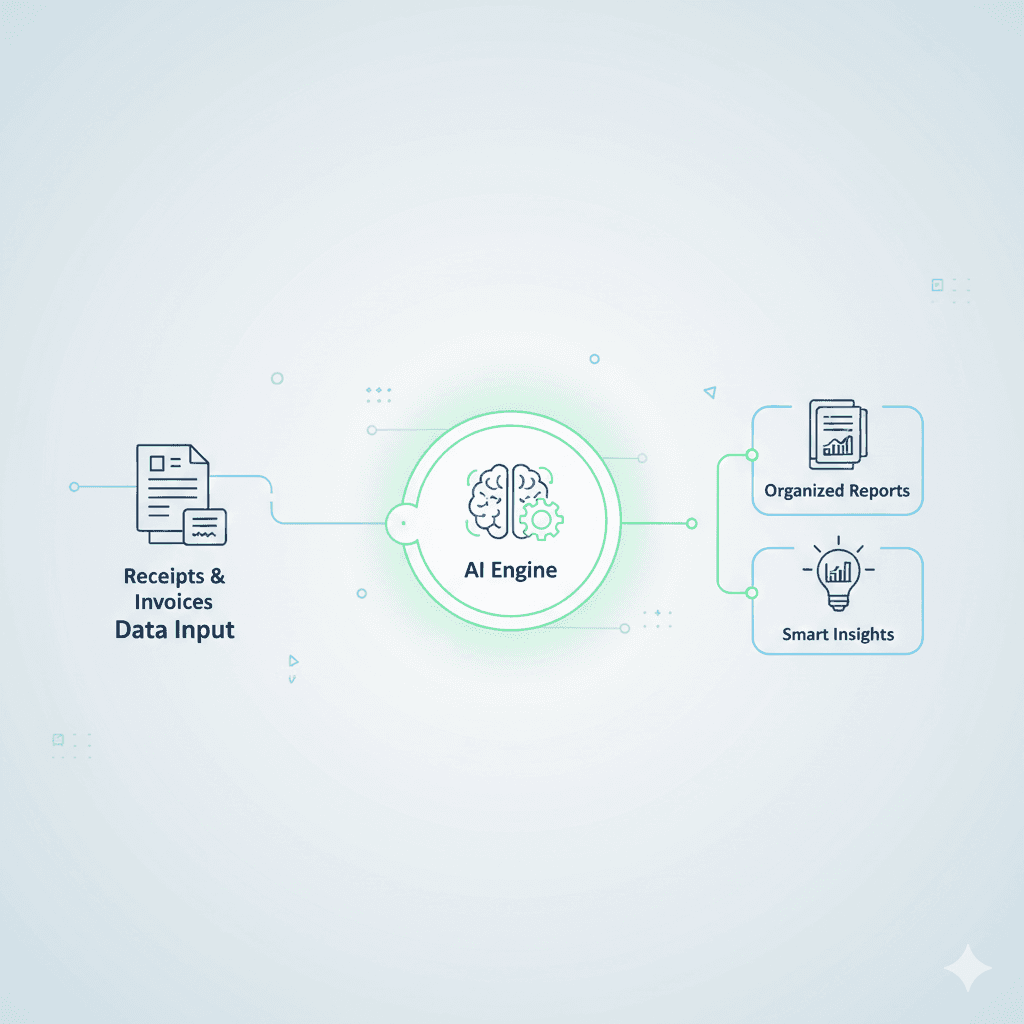
How AI Accounting Software Works (Step by Step)
1. Data Capture
AI accounting software can capture data from:
Purchase invoices
Expense bills
Receipts
Sales records
Instead of typing every detail, users upload documents or record transactions, and AI reads the information.
2. Intelligent Data Extraction
Using technologies like OCR (Optical Character Recognition), the software identifies:
Vendor or customer names
Invoice numbers
Dates
Amounts
Taxes
Line items
This significantly reduces manual typing.
3. Smart Categorisation
AI analyses the data and suggests or applies the correct:
Ledger accounts
Expense categories
Tax treatment
Over time, the system becomes better at recognising patterns.
4. Automatic Ledger Updates
Once data is processed, accounting records are updated automatically. Sales, expenses, and balances stay current without waiting for month-end entries.
5. Real-Time Reporting
Because data is always up to date, AI accounting software can show:
Profit and loss
Cashflow
Outstanding payments
Expense trends
Business owners don’t have to wait for reports to understand their financial position.
What Problems Does AI Accounting Solve?
AI accounting software helps businesses overcome common challenges such as:
Excessive manual data entry
Human errors in calculations
Delayed accounting updates
Confusion over outstanding payments
Poor visibility into financial performance
By automating routine tasks, businesses save time and reduce stress.
Who Can Benefit from AI Accounting Software?
AI accounting software is useful for:
Small and medium businesses
Retail and trading companies
Service providers and consultants
Freelancers and startups
Businesses with limited accounting staff
It is especially helpful for businesses that handle regular invoices, expenses, and payments.
Is AI Accounting Difficult to Use?
A common misconception is that AI accounting software is complex. In reality, most modern platforms are designed to be easy to use, even for non-accountants.
The AI works in the background, while users interact with simple dashboards and workflows. The result is less manual work, not more complexity.
How hisabkitab Uses AI in Accounting
hisabkitab is an example of AI-enabled accounting software that focuses on simplicity and automation. It uses AI to assist with bill and expense entry, suggest ledgers, and keep records updated in real time.
By reducing manual accounting work, hisabkitab helps businesses focus more on decision-making and growth rather than data entry.
The Future of Accounting with AI
AI accounting is not a future concept—it is already changing how businesses manage finances. As AI technology improves, accounting systems will become even more accurate, faster, and more predictive.
For businesses, this means:
Better financial control
Faster insights
Less time spent on paperwork
Conclusion
AI accounting software simplifies accounting by automating repetitive tasks, reducing errors, and keeping records updated in real time. Instead of replacing accountants, it empowers businesses and finance teams to work smarter.
Understanding how AI accounting works helps businesses choose tools that save time, improve accuracy, and provide financial clarity without adding complexity.
Continue Reading